Most travelers pack their national park plans into June, July and August, then wonder why the trailheads look like stadium parking lots. Visiting national parks in winter flips that experience on its head. Crowds thin out, lodging gets cheaper, and landscapes you thought you knew take on a completely different character under snow or soft desert light.
I have spent several winters chasing quiet trails across the country, and the parks below are the ones I keep recommending to friends. Some are snowy wonderlands, others are warm escapes, and all of them reward a little extra planning.
Why Visit National Parks in Winter
The obvious draw is solitude. Parks that see millions of summer visitors can feel almost private on a weekday in January. Wildlife is often easier to spot, too, because animals move to lower elevations and stand out against the snow. Photographers love the low sun angle, which gives warm light for much of the day rather than just at sunrise and sunset.
There are trade-offs. Some roads close for the season, visitor centers run shorter hours and daylight is limited. The trick is choosing parks where winter is a feature rather than an obstacle. The National Park Service posts current road conditions and seasonal closures for every unit, and checking those pages a day or two before you go is the single best habit you can build.
Snowy Parks Worth the Cold
Yellowstone, Wyoming. Winter in Yellowstone is something else entirely. Most park roads close to regular cars, so you reach the interior by guided snowcoach or snowmobile tour. Steam from the geyser basins hangs in the frozen air, bison wander with frost on their backs and Lamar Valley becomes one of the best places in North America to watch wolves.
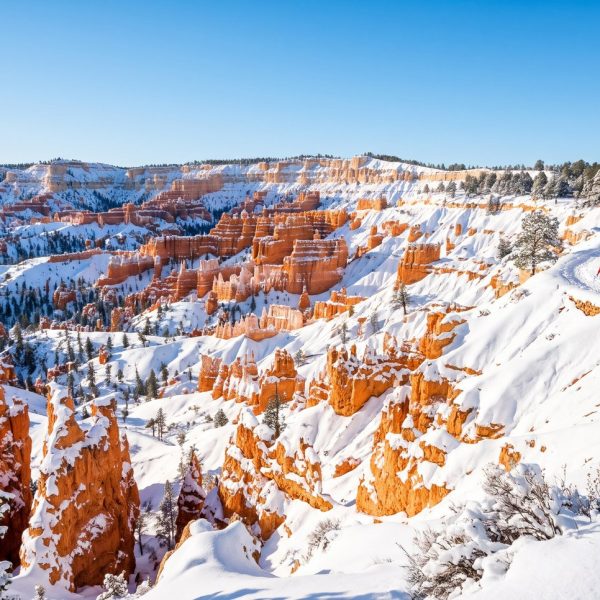
Bryce Canyon, Utah. The orange hoodoos dusted with white snow are a sight that photos never quite capture. The main road usually stays open, and rangers lead snowshoe walks when conditions allow. Bring traction devices for your boots, because the rim trails get icy.
Yosemite, California. Yosemite Valley stays accessible all year, and winter brings waterfalls framed by ice and a rink at Curry Village. Tire chains may be required on the approach roads, so carry them even if the forecast looks clear.
Warm Escapes for a Winter Road Trip
If you would rather swap snow boots for sunscreen, the Southwest and Florida are at their best in the cooler months.
Death Valley, California. Summer temperatures here can be dangerous, but winter days are pleasant for hiking slot canyons, walking the salt flats at Badwater Basin and exploring the dunes. The night skies are some of the darkest in the country.
Big Bend, Texas. Remote and enormous, Big Bend combines desert, mountains and the Rio Grande in one park. Winter is peak season for good reason. Book campsites and lodging early.
Everglades, Florida. The dry season, roughly December through April, is the best time to see alligators, wading birds and manatees, and mosquitoes are far less of a nuisance. Paddling routes and the Anhinga Trail are easy introductions.
Joshua Tree, California. Cool days make climbing and scrambling comfortable, and it pairs nicely with Death Valley on a longer winter road trip through the desert.
For a full overview of all 63 parks, the list of national parks of the United States on Wikipedia is handy for sketching a route by state and region.
Practical Planning Tips
Start with an annual national park pass. The America the Beautiful pass covers entrance fees at every national park and many other federal lands, and for US residents it usually pays for itself after three or four visits. International visitors should check current pricing on the official site, because fees for nonresidents differ.
Layer your clothing, even in desert parks. A morning that starts below freezing can climb into the 60s by noon. A warm hat, gloves, a packable insulated jacket and a waterproof shell cover most situations. Carry more water than you think you need, since dry winter air dehydrates you quickly.
Plan around daylight. In December some northern parks get fewer than nine hours of usable light, so set off early and keep hikes modest. Always tell someone your route and expected return time, especially where cell coverage is patchy.
Finally, check whether campgrounds are open. Many close in winter, but others stay open on a first-come, first-served basis. Families who want to try it can read this guide to camping in national parks for tips on gear and choosing a site.
Traveling From Abroad
International visitors are a growing share of winter traffic, especially in the Southwest. Park signage and ranger programs are mostly in English, though some larger parks offer brochures in several languages. If you enjoy thinking about how travel and language intersect, this piece on popular travel destinations and their languages is a fun read before planning your next trip.
The Quiet Season Rewards You
Winter will not suit every park or every traveler, but for those willing to dress warmly and plan ahead, it offers something summer cannot: space to breathe. Pick one snowy park and one desert park, link them with a scenic drive, and you will come home with photos and memories that feel entirely your own.