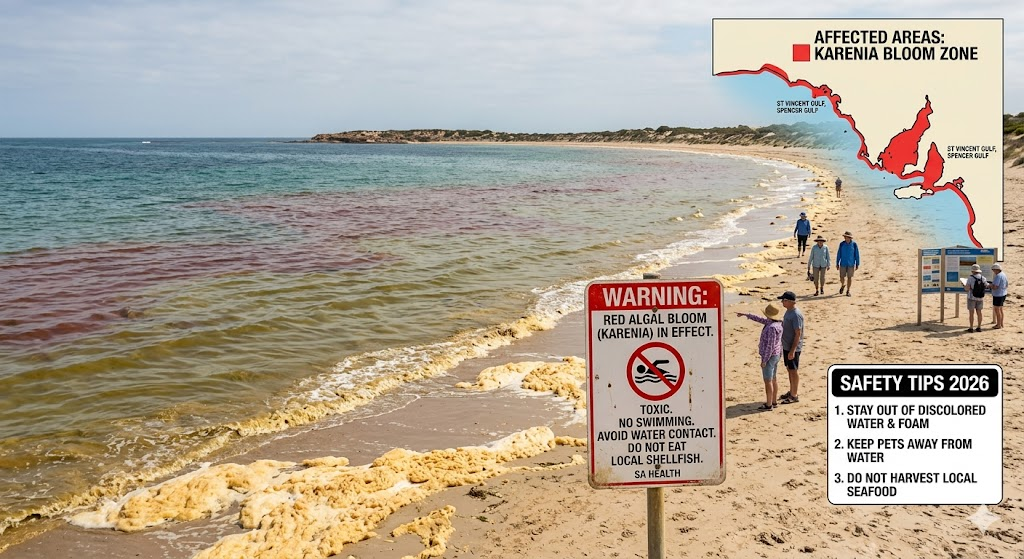

Have you noticed the water looking a bit strange lately? Maybe you’ve seen some yellow foam on the sand or the ocean looks a different color than usual. If you live near the coast, you might be hearing a lot about the south australia algal bloom. It sounds scary, but I’m here to help you understand what’s going on in simple terms. This bloom has been a big part of our lives for a while now, and knowing how to handle it makes a huge difference.
An algal bloom happens when tiny plants in the ocean grow very, very fast. It’s like a garden that suddenly gets way too much fertilizer and sunlight. In our case, a type of algae called Karenia has taken over some of our beautiful beaches. While it’s a natural event, it has definitely changed how we enjoy our weekends at the coast. Let’s dive into what this means for you, your pets, and our local fish.
What is the South Australia Algal Bloom?
The south australia algal bloom is a massive growth of microscopic organisms in our coastal waters. Think of it like a “forest fire” but underwater and made of tiny plants. The main culprit here is a species called Karenia cristata. Scientists found that this algae has actually been in our waters for over ten years! However, it usually stays quiet and doesn’t cause trouble.
In early 2025 and continuing into 2026, the conditions became “perfect” for this algae to explode in numbers. Warm water from marine heatwaves and extra nutrients from river floods acted like rocket fuel. This caused the algae to spread across a third of South Australia’s coastline. When there are billions of these tiny cells, they can change the color of the water and create thick, yellowish foam.
Is it Safe to Swim Right Now?
The short answer is: mostly yes, but you need to use your eyes first! Health experts say that if the water looks clear, you are good to go. However, if the water looks rusty, brown, or has a lot of foam, it is best to stay out. The south australia algal bloom can sometimes irritate your skin or eyes. It’s a bit like getting a mild “stinging” feeling if you touch it.
If you do accidentally go for a dip in foamy water, don’t panic. Just make sure to rinse off with fresh water as soon as you can. For most people, any itchy feeling goes away in just a few hours. The most important thing is to look before you leap. If it doesn’t look like the beautiful blue water we love, maybe just stick to a walk on the sand for the day!
How the Bloom Affects Your Health
Most of us won’t feel much from the south australia algal bloom, but some people need to be more careful. When waves break on the shore, they can “pop” the tiny algae cells. This releases something called brevetoxins into the air. If the wind is blowing toward the land, you might breathe these in. This can cause a scratchy throat or a little cough.
If you have asthma or other lung problems, you should be extra cautious. It’s a good idea to keep your inhaler handy and avoid beaches where there is a lot of foam. If you live right on the beachfront and start feeling a bit wheezy, closing your windows can help keep the air inside fresh and clean. It’s all about being smart and listening to what your body is telling you.
Impact on Our Amazing Marine Life
This has been a really tough time for our local sea creatures. The south australia algal bloom isn’t just a nuisance for us; it’s been very hard on fish, sharks, and even seadragons. Because the algae grows so fast, it uses up all the oxygen in the water. Without oxygen, fish can’t breathe, which is why we have seen many washed up on the shore.
It’s heartbreaking to see, but experts tell us the best thing to do is leave them alone. Dead fish can carry bacteria that might make you sick. If you see a lot of dead marine life, you can call the “Fishwatch” hotline. Our environment is very strong, and even though it looks bad now, the ocean will eventually find its balance again and recover.
Can I Still Eat Local Seafood?
The good news is that you can still enjoy your favorite fish and chips! All the seafood you buy at the supermarket or a restaurant is tested very carefully. The government makes sure it’s 100% safe before it gets to your plate. The south australia algal bloom mostly affects things like wild oysters or mussels that people collect themselves on the beach.
If you are a recreational fisher, you can still catch and eat fish, crabs, and squid. Just make sure to clean them thoroughly and remove the guts before cooking. The “golden rule” right now is: don’t eat wild shellfish (like mussels or cockles) that you find yourself, except at specific spots like Goolwa Beach where testing says it’s okay. When in doubt, buy from a pro!
Quick Reference: Algal Bloom Safety Table
| Feature | What to Look For | Safety Action |
| Water Color | Brown, Red, or Dark Green | Avoid swimming or surfing. |
| Foam | Thick, yellow or white “sea foam” | Keep kids and pets away. |
| Smell | Strong “fishy” or earthy odor | Move to a different part of the beach. |
| Health | Coughing, itchy eyes, or skin rash | Rinse with fresh water; see a doctor if it lasts. |
| Pets | Dogs drinking or rolling in foam | Wash them immediately with fresh water. |
Why Is This Happening Now?
You might be wondering why the south australia algal bloom is so much bigger this time. It’s a combination of a few things. First, the ocean has been much warmer than usual—about $2.5°C$ above average! Algae loves warm water. Second, big floods from the Murray River a couple of years ago brought a lot of “food” (nutrients) into the sea.
Finally, we’ve had very calm weather with lots of sun. Without big storms to mix up the water, the algae just sat on the surface and multiplied. It’s a bit like a “perfect storm” of nature, but in reverse. Scientists are now working hard to track these blooms so we can be better prepared if it happens again in the future.
Protecting Your Pets at the Beach
Our furry friends love the beach just as much as we do! The south australia algal bloom is generally safe for dogs, but you should still be careful. If your dog loves to jump in the waves, try to find a spot where the water is clear. If they get into the yellow foam, give them a good bath with the hose as soon as you get home.
The biggest risk for dogs is if they eat dead fish they find on the sand. Since the bloom has caused some fish to wash up, keep a close eye on your pup while you’re walking. If they seem sick or start acting strange after a beach trip, a quick call to the vet is always the best move. Most of the time, they’ll be just fine!
How Scientists Track the Bloom
It’s pretty cool how we keep an eye on the south australia algal bloom. Scientists use satellites high up in space to look at the color of the ocean from above. They also take water samples every week at over 20 different spots along our coast. This helps them create a “map” so we know which beaches are clear and which ones are “blooming.”
By looking at DNA in the water, researchers have learned that this algae is a local “resident” and not a new invader. This is important because it means we can learn how to live with it. The more we know, the better we can protect our fishing industry and our beautiful holiday spots for years to come.
Frequently Asked Questions
1. Is the South Australia algal bloom toxic? Yes, the Karenia species involved produces brevetoxins. While these are very dangerous for fish and marine life, they usually only cause minor skin or breathing irritation in humans.
2. Can I walk my dog on the beach? Yes! Walking your dog is safe. Just try to keep them out of thick foam and make sure they don’t eat any dead fish they find on the sand.
3. How long will the algal bloom last? Blooms can last for months or even a year depending on the weather. They usually start to fade when the water gets colder or when a big storm mixes up the ocean.
4. Can I get sick from eating fish I caught? Most fish are safe if you clean and gut them properly. Avoid eating wild-caught shellfish like oysters or mussels, as these can soak up the toxins.
5. What should I do if I feel itchy after swimming? Rinse off immediately with fresh, clean water. The irritation is usually temporary and should disappear within a few hours.
6. Does the bloom affect the smell of the air? Sometimes! If there is a lot of algae, it can have an earthy or slightly fishy smell, especially if the wind is blowing off the ocean.
Conclusion
The south australia algal bloom is a big change for our coastline, but it doesn’t mean we have to stay away from the ocean forever. By staying informed and using a little bit of common sense, we can still enjoy our beautiful South Australian lifestyle. Remember the simple rules: if it looks clear, it’s fine to swim; if it’s foamy or brown, maybe just enjoy the view from the shore.
We live in one of the most beautiful places in the world, and nature occasionally throws us a curveball. Let’s keep supporting our local fishers, looking out for our pets, and respecting the ocean as it goes through its natural cycles. See you at the beach!